
I own two gongs, which is either a calling or a hoarding problem. A 38" Paiste Symphonic, my workhorse, and a 24" Uranus planet gong. Both hand-made in North Germany.
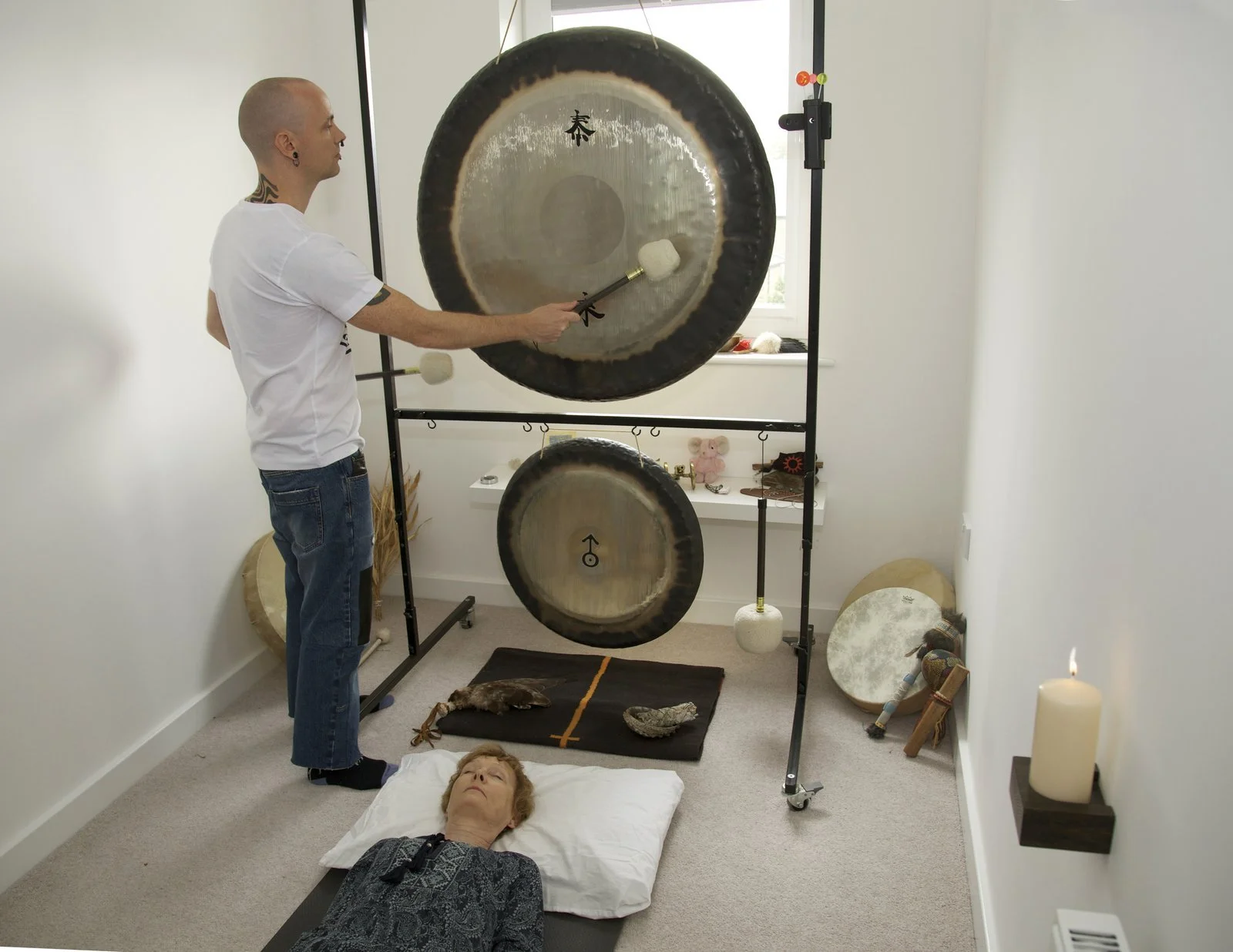
My cozy N15 practitioner space.
Each one comes with a certificate of when it was made. Mine, quite by accident, has my birthday on it (what a touch!). Orchestras play the exact same kit, so you're just as likely to catch one at the Barbican as in my therapy room. Strike one properly and the sound doesn't behave like anything else in a room - it opens, spreads, and keeps going way longer than you'd expect it to.
The lost art of making a gong
That "blossom" is real gong-speak - it's the sound opening up after the strike. How they actually made these has largely been lost. A nineteenth-century account of Chinese gong foundries describes quenching red-hot bronze in cold water at exactly the right second - too early or too late and you get a dull, tinny mess instead of something that lasts generations. In short, not even Paiste have cracked it.
So if you've ever pilfered a gong from the British Museum (they've got a few, I checked, not that I'm suggesting anything), don't be shocked if it out-blossoms mine.
What a gong bath actually does
It's not so much about the sound, it's more about reframing silence - be thought of as the presence, not absence of something. Lie down, and the gong does the work of occupying your attention so the rest of you can stop the mental gymnastics, inner chatter and squirming around like a floor caterpillar.
Can you actually switch off, though?
Mary couldn't, or thought she couldn't - never managed more than fifteen minutes of meditation in her life, and went into her first gong bath convinced she'd be watching the clock. Instead she went off into orbit and landed on the other side claiming she had no idea a full ninety minutes had passed (I get this a lot - just sayin').
Why switching off feels impossible
London runs on dopamine hits - notifications, Slacks, pings, swipes, Arthur updates. Answer one, three more appear like lemmings. When was the last time your brain was quiet for an afternoon? And why does switching off feel like an impossibility?
Turns out that's arse backwards. A 2012 study found that minds left free to wander solve problems more creatively than minds kept busy, or even minds given a straightforward rest. Stopping the clock isn't wasted time. It's a skill we urban misfits need to master.
None of this needs you to already be "a meditation person." Most people who end up on my floor have at least two jobs, a million deadlines and various shades of ADHD. Urban misfits - you're in the right place. ;) x
If you want to try stopping the clock before you book anything, the free Medicine Wheel journey is still sitting there waiting: grab it here.